Four Nights in Europe: What Mixed Artificial Light Does to a Photograph
Four nights, four cities, and four different reasons the light didn’t want to cooperate. Shooting street scenes after dark means giving up control over color temperature the moment the sun goes down, because a city block at night is never lit by one source. It’s lit by whatever happens to be left on: sodium vapor streetlamps, LED shop signs, string lights over a beer tent, and whatever’s bouncing off wet stone. Getting a usable frame out of that mix took a different fix in each city.
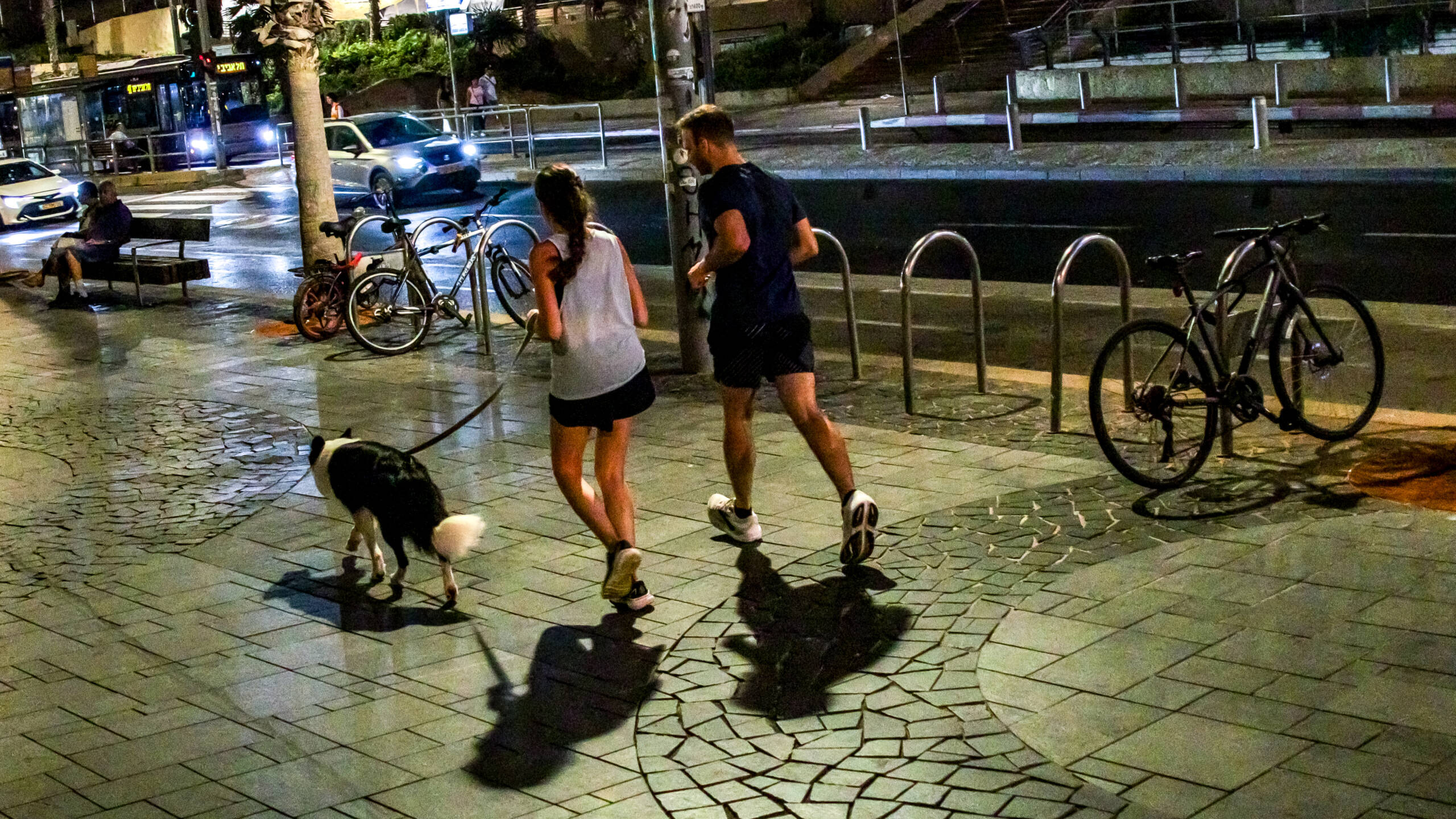
The plaza shot came first. Two runners and a dog crossed a wet square lit by three sources that had nothing in common: a green-tinted floodlight on one building, blue LED trim along a walkway, and a warm orange sodium lamp overhead. Auto white balance tried to average all three and produced mud. The fix was shooting raw, setting white balance for whichever light covered the most of the frame (the orange lamp), and letting the green and blue read as accents instead of fighting them. Wet pavement did the rest, mirroring every color back up at twice the saturation.
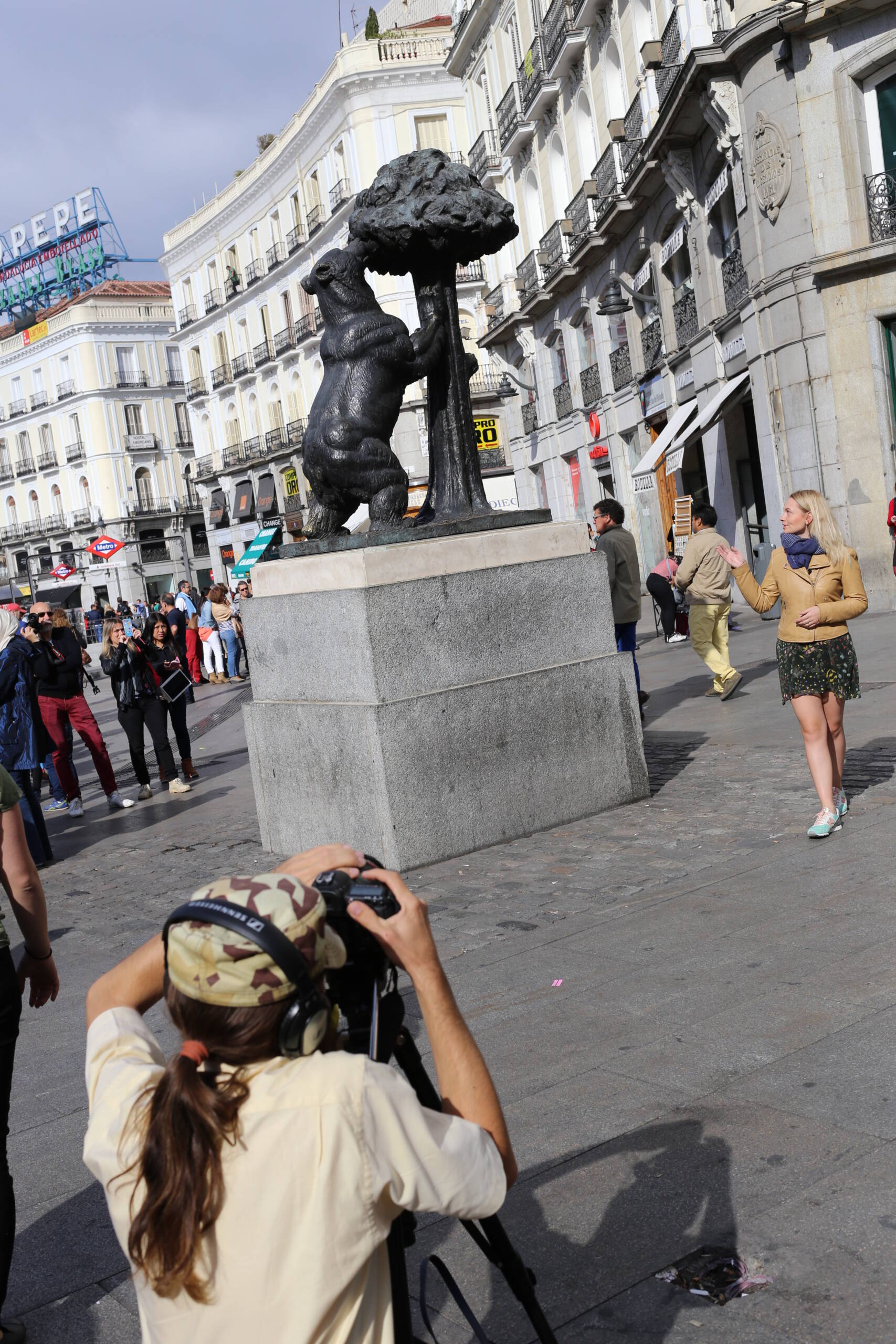
Prague’s astronomical clock is a different problem: one light source, but an unforgiving one. The calendar dial is lit from below by fixed floodlights that don’t move and don’t dim, so the only variables I actually controlled were exposure and angle. Shooting the zodiac medallions straight on blew out the gilding. Dropping a stop and coming in at a slight angle kept detail in both the gold leaf and the statues flanking the dial. Tripod, two-second timer, done. A single hard light with zero flexibility turned out to be its own kind of trouble, just a quieter one than the plaza.
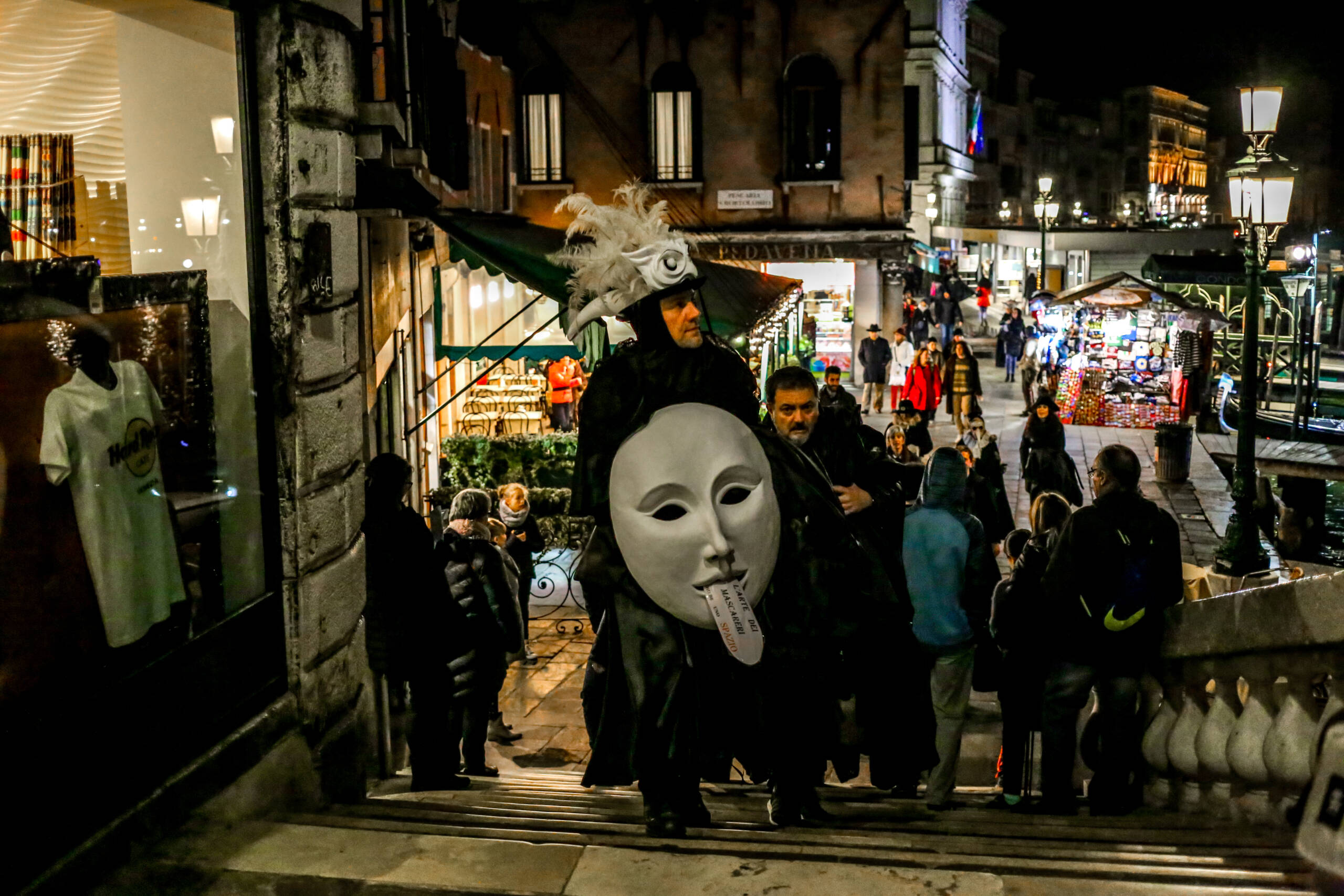
Venice on the Rialto steps gave me a third kind of mixed light: warm tungsten from shop windows against the cold blue of a sky that hadn’t fully gone dark yet. The mask seller in the plumed tricorn was lit almost entirely by the window behind him, which put him in near-silhouette against his own merchandise. I underexposed by about a stop and let the plume catch just enough rim light to separate him from the background. Blue hour gives you maybe ten minutes where the sky still holds color and the street lamps are already on. That window is short and worth planning a route around in advance.
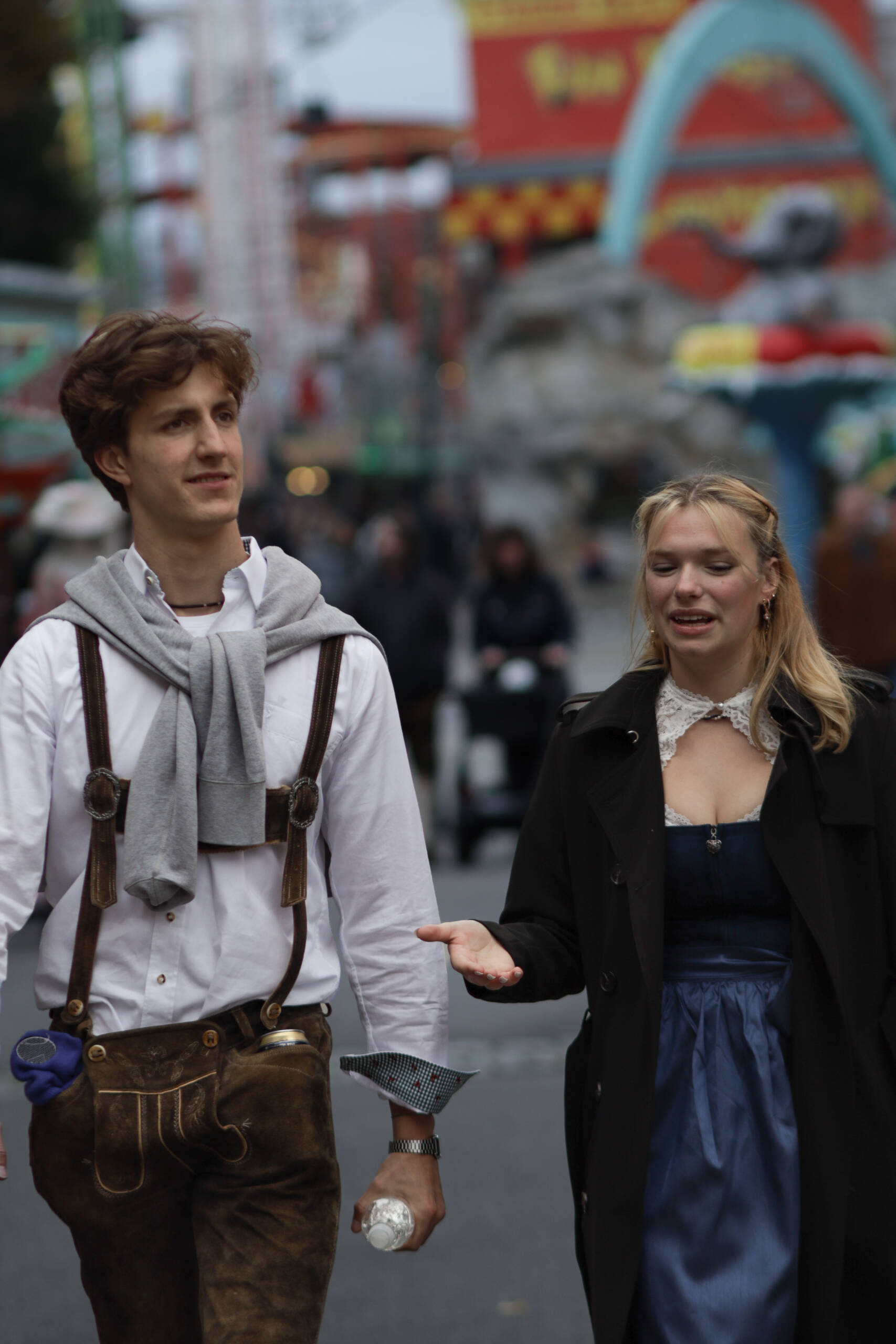
Munich was the easiest of the four, and the most forgiving. Oktoberfest’s midway is built to be photographed at night: ride lights, string bulbs over the tents, and enough ambient glow that ISO 800 and a fast prime handled it without a tripod. The couple in Tracht walking past a row of lit stalls needed nothing clever, just a fast enough shutter to freeze the crowd and a wide enough aperture to blur the string lights into soft points of color behind them. Sometimes a night shot really doesn’t need a workaround.
What ties these four together has nothing to do with the cities themselves. Night photography turns out to be several different skills wearing one name: reading which light source actually dominates a scene, deciding whether to fight it or lean into it, and recognizing the rare scene that just doesn’t need any of that.
- Wrocław’s Market Square in Fisheye: Why I Kept the Distortion
- Salamanca’s Stone Faces: A Photo Essay in Five Frames
- Europe’s Tourist Crime Belt: Pickpockets, Bracelet Scams, and Why the Same Offenders Keep Working
- The Beach Racket in Italy, Greece and Spain: Turnstiles, Cheap Concessions, and a Shoreline You Can’t Reach
- Why Lisbon Cafés Are Putting Up No Laptops Signs: Coffee, Instagram, and the Remote Work Terrace
- Four in Ten Travelers Visit Landmarks Mainly for the Photo: How Instagram and Reels Reshaped Tourism
- Why Comporta Still Feels Empty: The Rice Estate Behind Portugal’s Most Coveted Beaches
- Travel in 2026: Five Photos That Explain the Year’s Real Trends
- Tiny Tourism: Why Travellers Are Choosing Towns Nobody Photographs
- In Defence of the Hop-On Hop-Off Bus